Panasonic
eFleet Charge Management
Transforming how fleet managers monitor, schedule, and optimize EV charging across their entire vehicle network.
Role & Scope
Role
Team
Timeline
8 months
Scope
Strategy, UX & UXR, Design
Responsibilities:
Shaped product vision and competitive positioning with executive stakeholders
Led user research project that defined our strategic direction
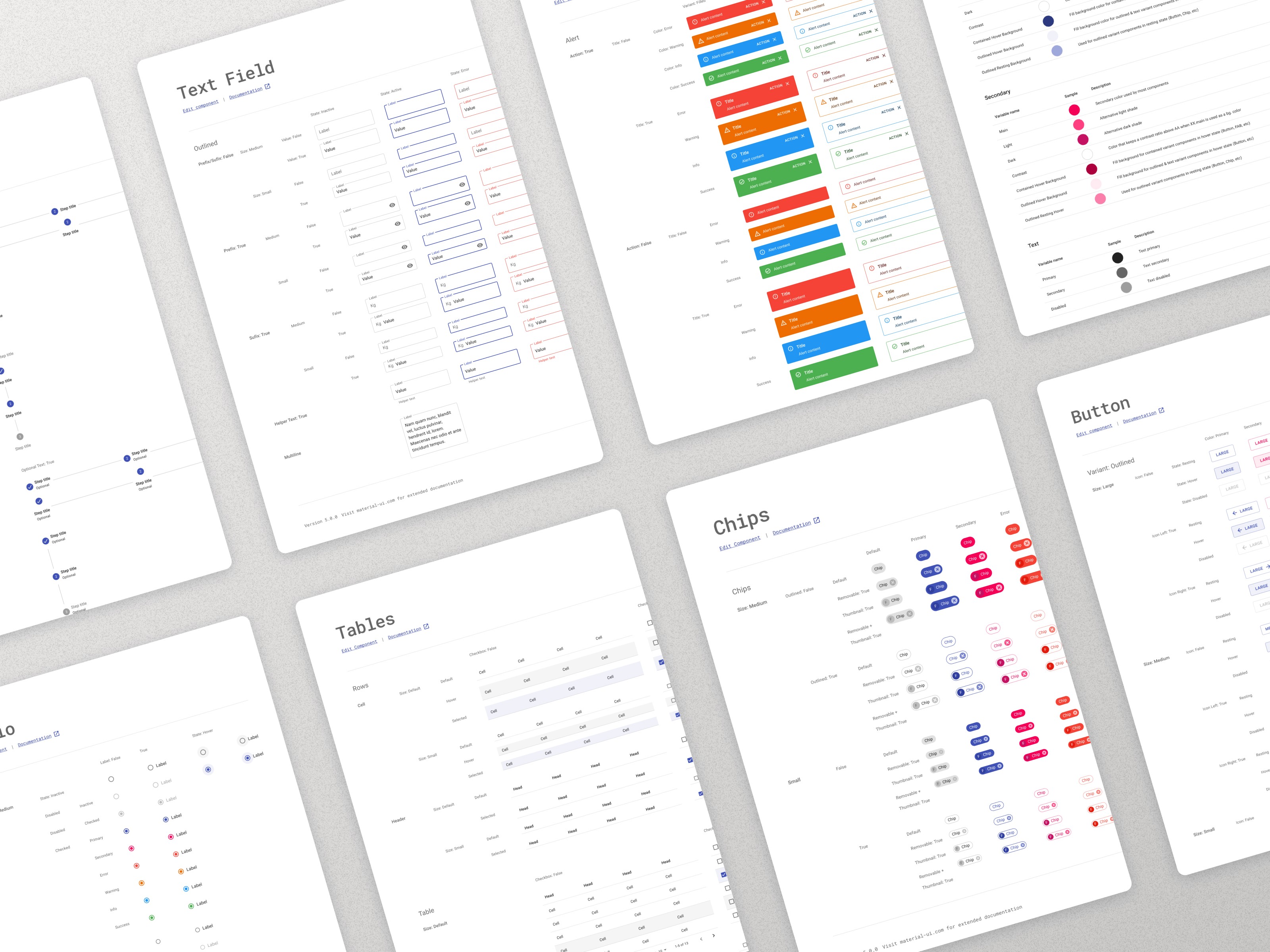
Established design system, accessibility and quality standards for the team
Partnered with Product and Engineering leadership on roadmap prioritization
The Challenge
Panasonic identified a strategic opportunity in the emerging EV fleet market.
While competitors offered basic charging hardware, no solution addressed the operational complexities fleet managers actually face: unpredictable vehicle availability, manual route planning and charging, and reactive maintenance causing costly downtime.
Capturing this market required moving beyond infrastructure to become the smart operations platform for electric fleets.
Outcomes
Reduced charge-related downtime by 40%
Increased fleet utilization by 25% through optimized charging
Customers reported the platform was 'critical' to their EV operations
Enabled sales team to win 2 major contracts against competitors
The Solution
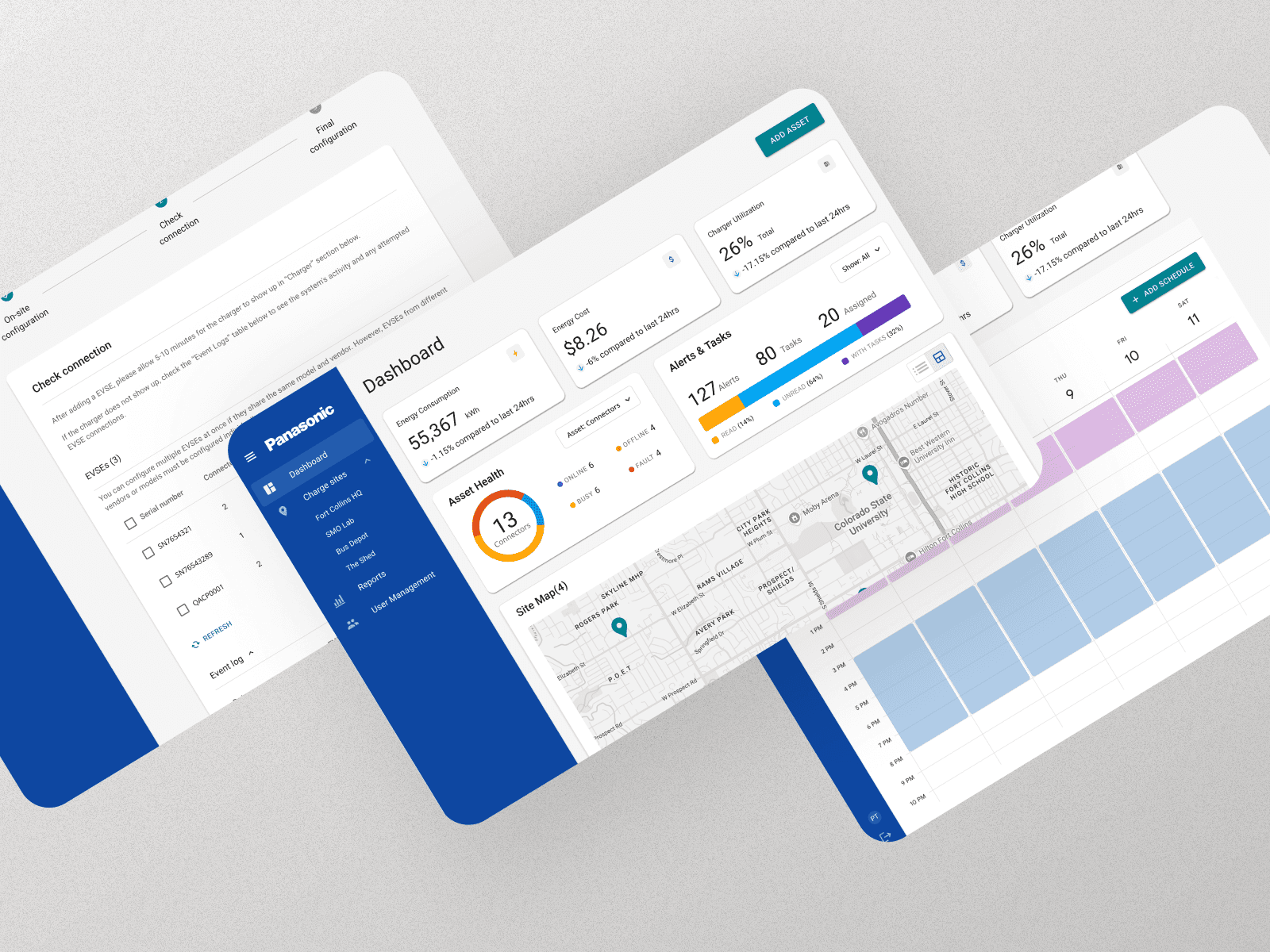
We designed an integrated charge management platform that gives fleet operators predictive control rather than reactive monitoring.
Rather than build yet another dashboard, we created a system that anticipates needs, automatically optimizing charge schedules based on need, proactively flagging maintenance issues before they cause downtime, and providing decision support tools.
This approach transformed charging from an operational burden into a strategic advantage, allowing fleet owners to confidently scale their EV operations.
Capabilities
Smart scheduling that balances vehicle availability, energy costs, and charge requirements
Predictive maintenance alerts that prevent downtime rather than report on it
Real-time visibility with actionable recommendations, not just data displays
Research & Strategic Insights
Key Finding
Fleet owners don't want more data, they want fewer decisions. Existing tools provided dashboards and alerts but left users drowning in information, manually creating charge schedules, etc across hundreds of variables daily.
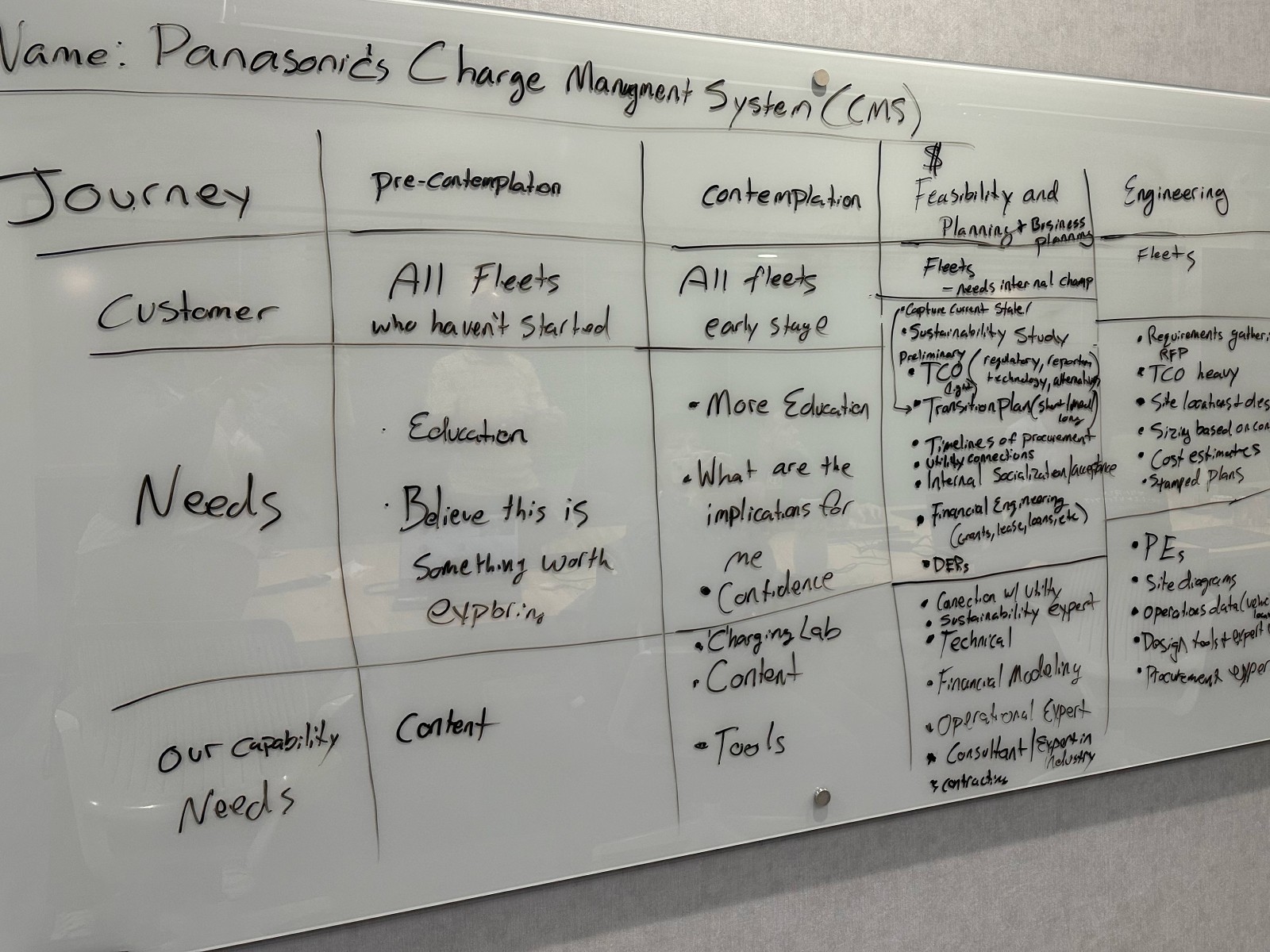
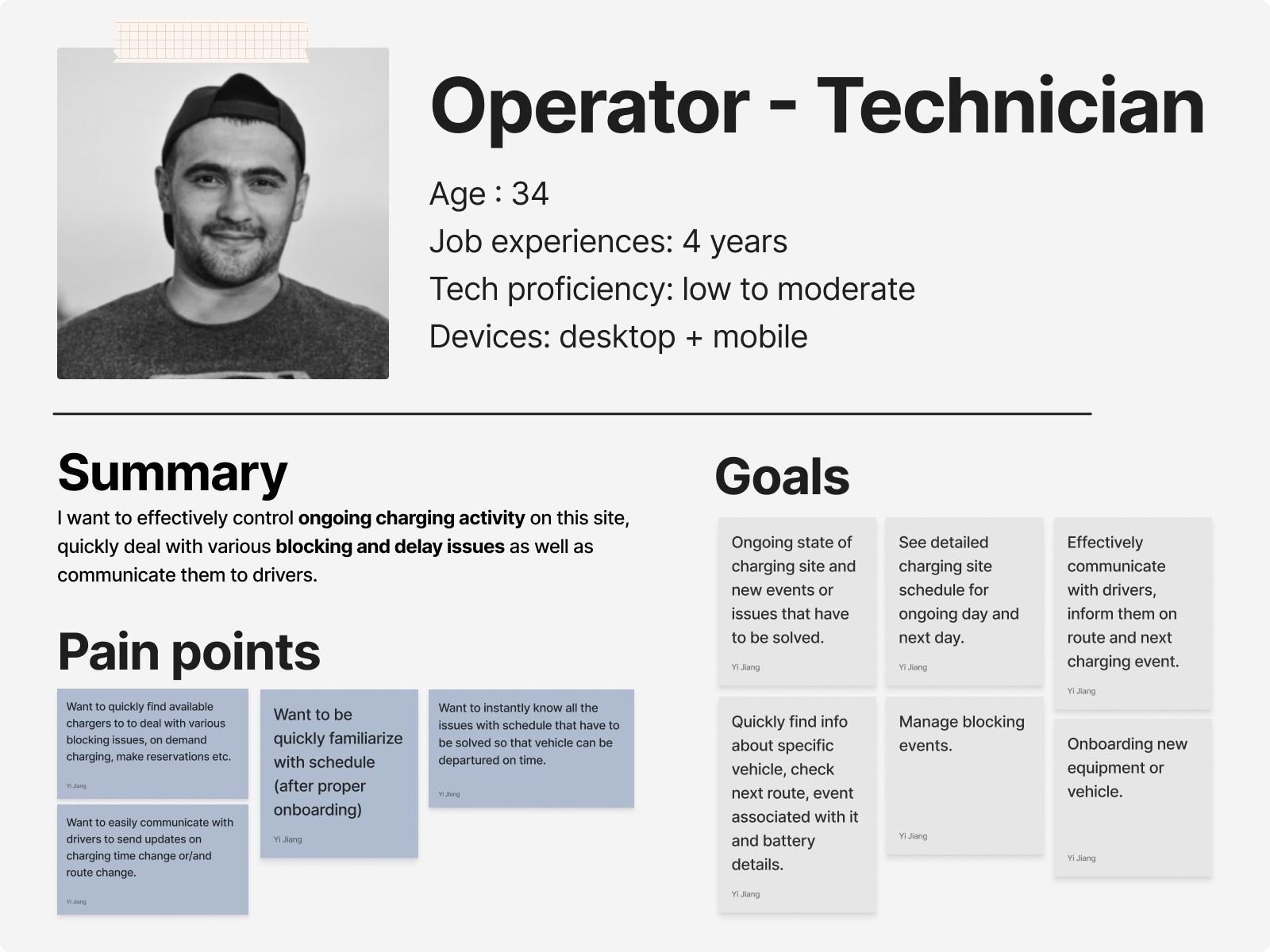
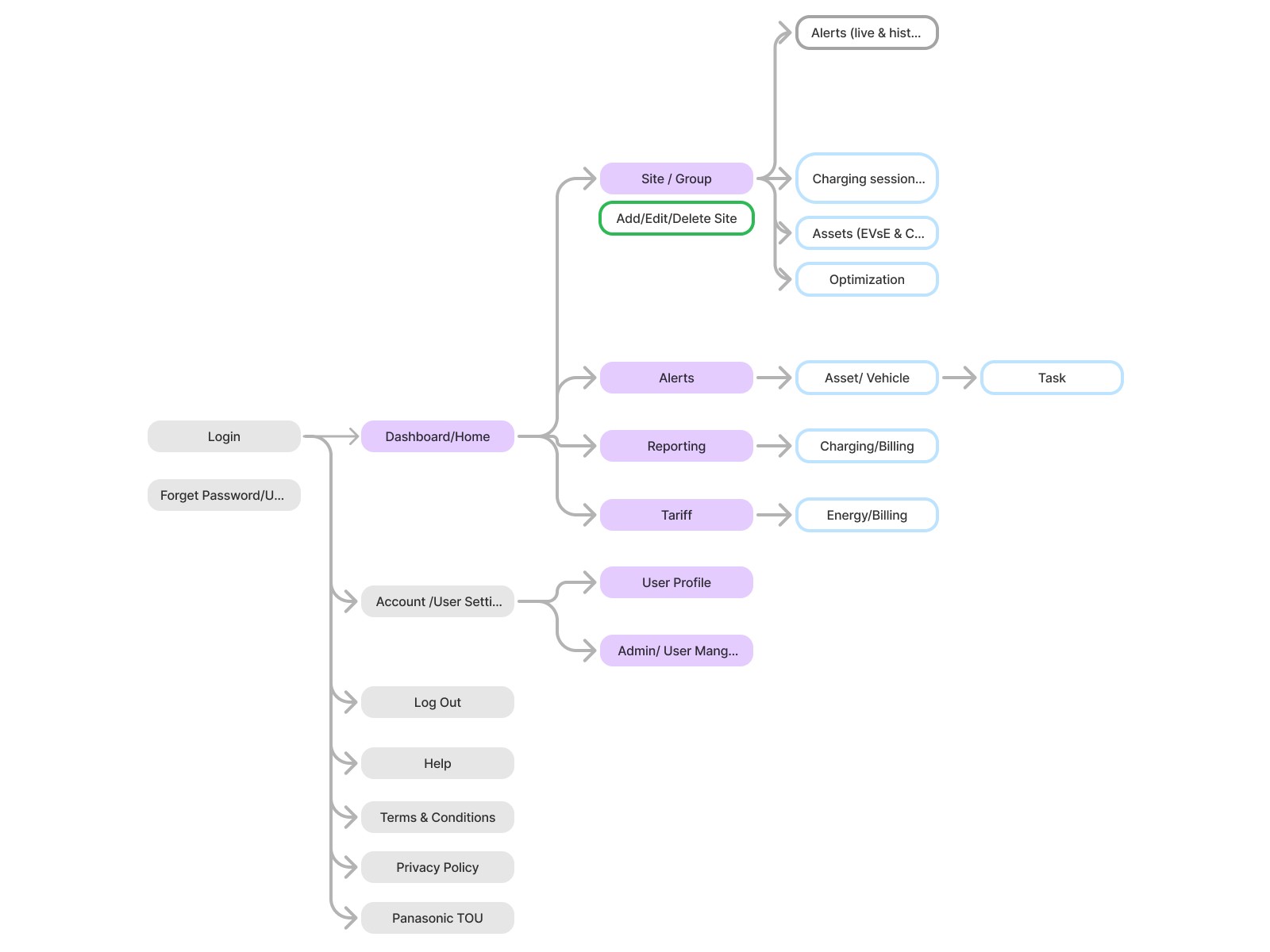
We conducted stakeholder interviews and field research with fleet operators managing 20-2000 vehicle fleets, plus competitive analysis of existing solutions. This research revealed a critical market gap that shaped our entire product strategy.
We pivoted from building a monitoring tool to designing a decision-support system. Success wouldn't be measured by features offered, but by decisions eliminated and time saved.
Competitive Landscape &
Our Positioning
Our analysis revealed three competitor categories, each with strategic strengths and weaknesses:
Hardware vendors with basic apps:
Focused on utilization metrics and billing. Treats charging as isolated from broader fleet operations.
Fleet telematics platforms:
Strong on vehicle tracking, but charging treated as afterthought with minimal intelligence.
Enterprise fleet management suites:
Comprehensive but complex, requiring training. Charging functionality buried within a broader tool.
Our Opportunity
Build the first truly intelligent fleet charging platform with predictive capabilities: sophisticated enough for complex operations, intuitive enough for daily use.
Pain Points & Business Impact
Through research, we identified pain points that weren't just frustrating users, they were deal-breakers threatening EV adoption:
Unpredictability creates business risk: uncertainty of vehicle availability to commit to client SLAs.
Fragmented tools force constant context-switching: Operators juggled 3-5 different systems (telematics, energy management, maintenance alerts). This complexity creates a barrier to adoption.
Manual coordination doesn't scale: with margins already tight, hidden labor costs made EV economics unsustainable
Reactive maintenance means costly surprises: unexpected charger failures can create cascading delays with a single charger outage costing $$$
UX Strategy
Most charge management tools force users into a cycle of constant vigilance; checking dashboards, responding to alerts, firefighting problems. We designed for a fundamentally different mental model: the system handles routine decisions autonomously, surfacing only exceptions that require human judgement.
Design Principles
Progressive Disclosure
We architected information hierarchy around decision timelines. This respects the user's cognitive bandwidth and reduces alert fatigue.
Actionable Insights
We're not just informing users - we're guiding them toward optimal outcomes. Every piece of information presented includes next steps.
Anticipatory Design
Operational patterns learned over time are used to proactively suggest optimizations - making expertise scalable.
Design Direction
As a leader, my role went beyond generating ideas to creating frameworks for efficient exploration. Setting clear guidelines actually accelerated creativity rather than limited it.
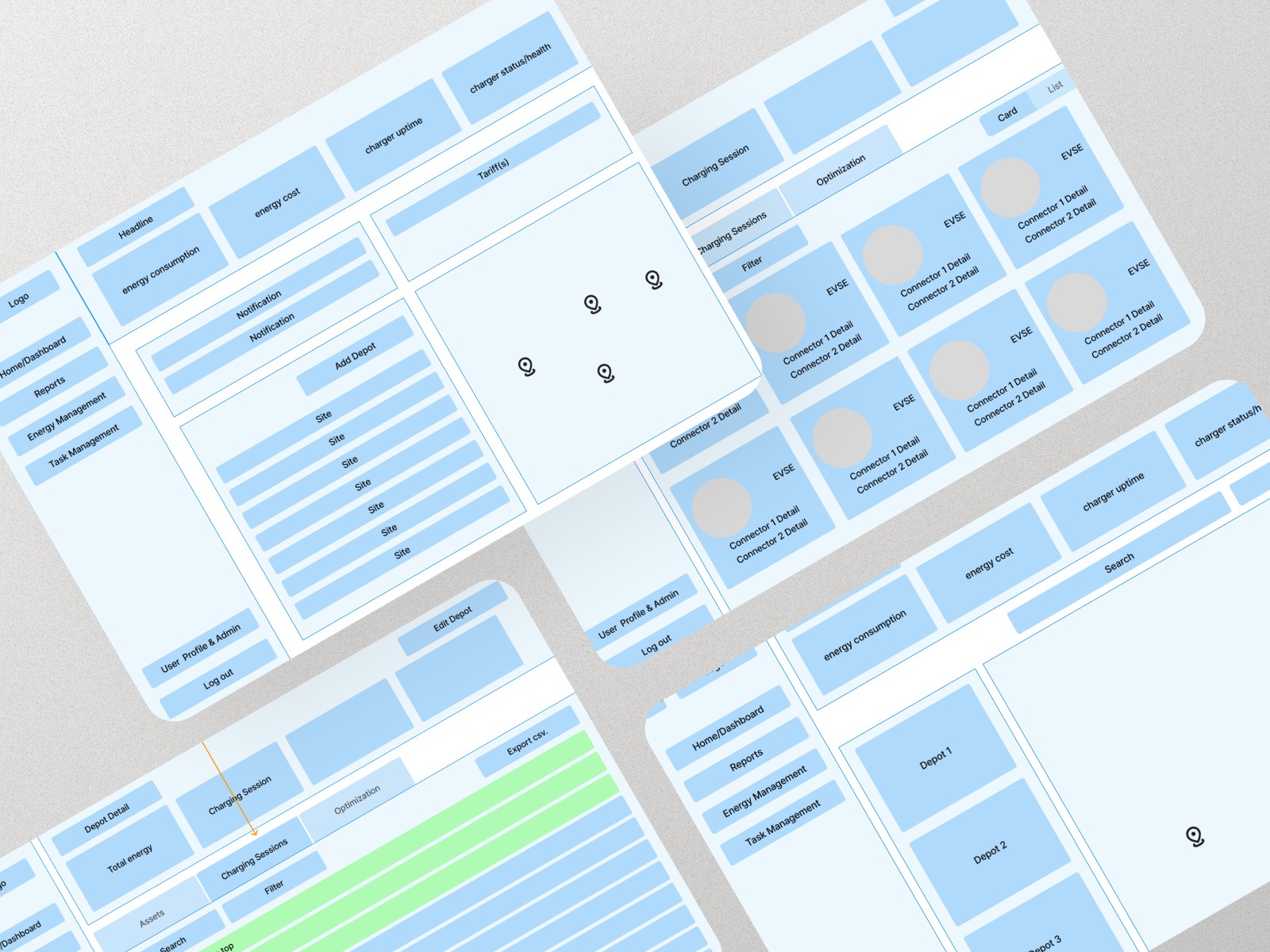
Rather than broad divergent ideation, we used constraint-driven exploration: balance speed with strategic rigor. With a limited timeline and a clear direction, I guided the team to explore within focused problem spaces:
How might we reduce decision-making burdens?
How might we make predictive insights trustworthy?
Prototypes over concepts - we moved quickly from sketching to interactive prototypes, testing with Product leadership and engineering weekly. This rapid feedback loop revealed 'showing it works' would build trust. This insight fundamentally shifted our direction from analytics-heavy to action-oriented interface design.
Exploration
Alert-centric dashboard
Users felt overwhelmed and reactive. Passed on despite data science and engineering preference for its simplicity.
Conversational AI Interface
Tests well with stakeholders but users need hands-free operational environments. Too novel for the conservative B2B context.
Mobile-first experience
Fleet owners and operators spend a majority of time at their desks. Mobile became secondary, not primary.
The Winning Direction
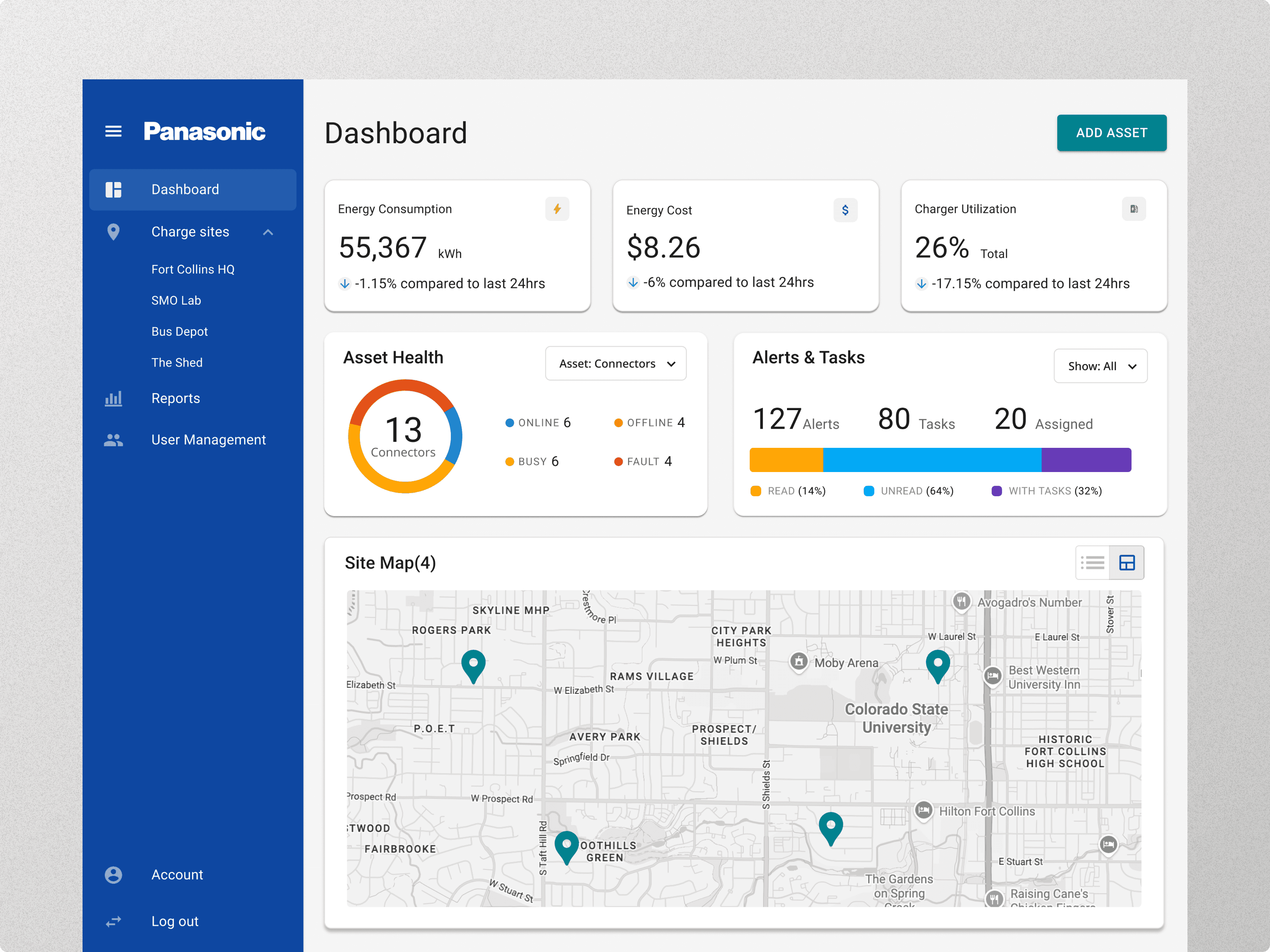
A desktop optimized workspace with smart recommendations and one-click optimizations. Not the most innovative, but the most operationally sound.
Lessons Learned
Start with the business model, not the feature list
Early on, we debated whether to prioritize real-time alerts or scheduling automation. What actually unlocked clarity was understanding Panasonic's revenue strategy: they needed differentiation that justified recurring software fees. This reframed our design priorities. In future projects, it's key to involve commercial strategy early to ensure design decisions ladder up to business viability.
Simplicity is the competitive advantage, not a compromise
Our instinct was to showcase technical sophistication through feature density. User testing proved the opposite: fleet operators preferred simpler workflows and less clicks to find the information they need. I learned that in B2B contexts, reducing cognitive load can be more valuable than adding capabilities. Restraint is design maturity.
Stakeholder alignment requires ongoing narratives
We secured initial buy-in on our strategic direction, but as implementation progressed, stakeholders began interpreting our vision differently. Engineering wanted to build for maximum simplicity. Sales wanted feature parity with competitors. Executives wanted the fastest path to revenue. I should have established more frequent alignment checkpoints. Leadership isn't just setting direction once but constantly reinforcing and defending said direction.
What I'd Do Differently
Not pushing harder on the pricing model earlier
Our UX delivered clear value, but we didn't collaborate with product and finance early enough to shape how that value would be monetized.
The pricing structure ultimately proposed didn't align with how customers perceived value in our services. If I could redo this project from day one? Advocate for value-based pricing that reflects the user experience we're creating.
With more budget and resources
We didn't have budget for longitudinal studies, so we designed based on stated needs rather than observed long-term behaviors.
Given the chance, I'd push for a pilot program with 3 or 4 real customers using a functional prototype for a minimum of 30 days. The insights from actual operational usage would have been invaluable and likely surfaced edge cases we'd missed.