Panasonic
Cirrus
Transforming how fleets monitor, schedule, and optimize EV charging at scale
Role & Scope
Role
Team
Timeline
18 months
Scope
Product Design, UXR
Responsibilities:
Reframed our product vision by shifting focus from data visualization to actionable workflows that enabled faster incident response
Built strategic alignment by conductting field research, identifying that a majority of our users relied entirely on vendor-provided interfaces and social media to perform tasks
Made critical scope trade-offs shipping core device health monitoring first, deferring advanced predictive analytics to establish trust before introducing AI-driven recommendations
Established design system foundations by creating scalable patterns across the platform, ensuring consistency and accessibility
The Challenge
State Departments of Transportation face critical infrastructure visibility problems. As Vehicle-to-Everything (V2X) technology deployments scale, operators have no reliable way to know if the hundreds of roadside units were functioning without costly physical site visits. A single road side unit failure could compromise emergency vehicles, pedestrians, and commuters, creating safety risks and eroding trust. We needed to transform infrastructure management from reactive field maintenance to proactive, data-driven operations.
Outcomes
400+ devices monitored across 4 states
85% reduction in field visits, reducing the need for manual diagnostics
$2.4M in annual operational savings for Utah DOT
The Solution
A cloud-native platform that transformed V2X infrastructure management from reactive troubleshooting to proactive operational control. The core innovation was treating device health not as an isolated metric but as part of a larger operational context - connecting hardware status to traffic operations, incident response, and maintenance workflows.
Capabilities
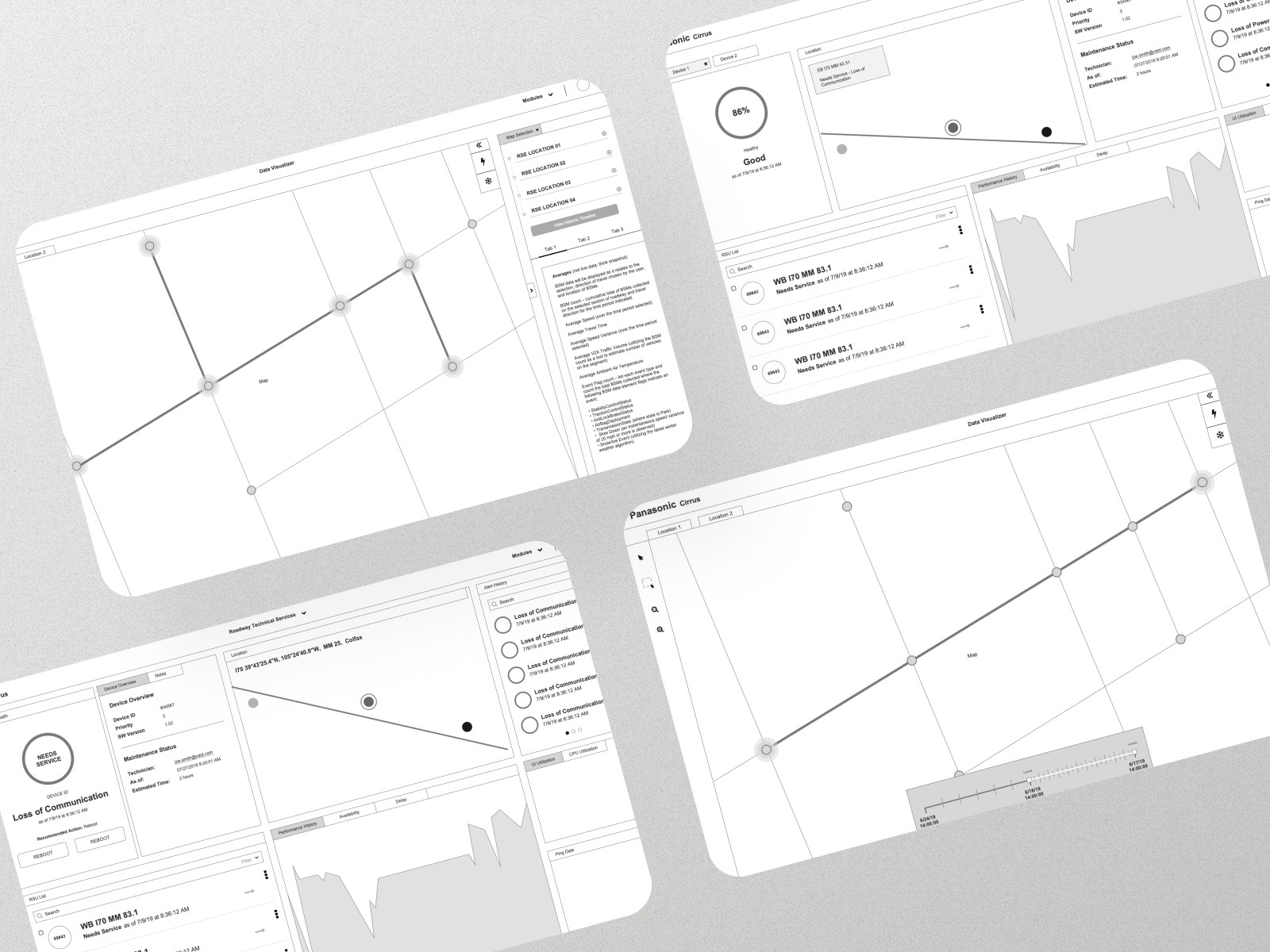
Unified device health dashboard for monitoring all connected roadside hardware featuring real-time status tracking
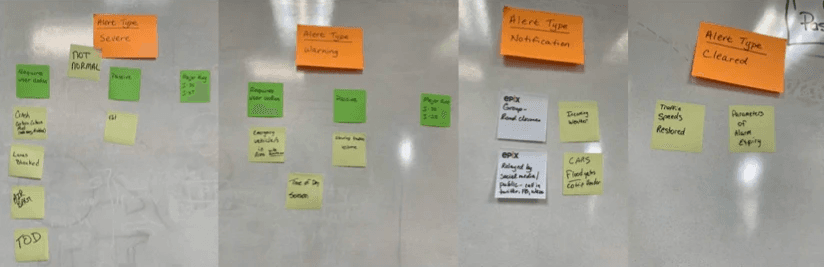
Context-aware notifications that distinguished between critical failures requiring immediate intervention and informal status changes
One-click remote operations eliminating up to 85% of field visits.
Research & Strategic Insights
Key Finding
The 'unknown-unknown' problem was costing a lot of money. DOTs couldn't measure the financial impact of failed roadside units because they didn't always know when devices went offline.
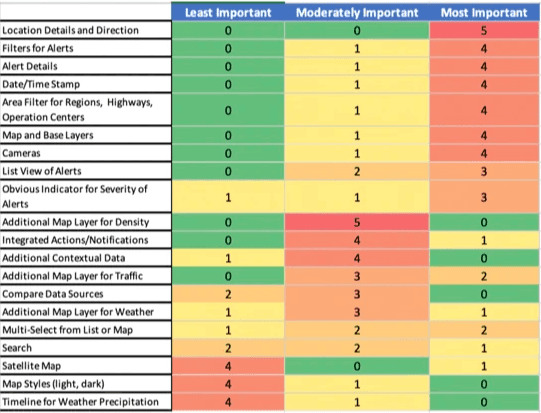
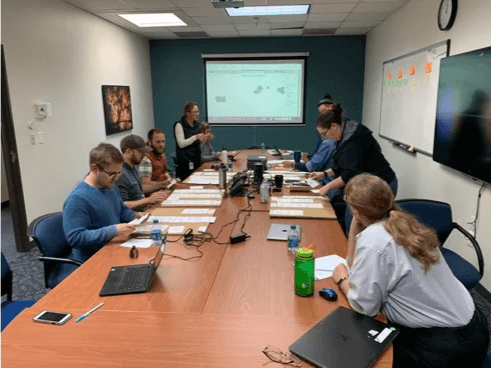
We conducted field research with the Utah Department of Transportation at their traffic management centers, identifying that operators relied heavily on social media and police radio to identify traffic and/or hardware problems.
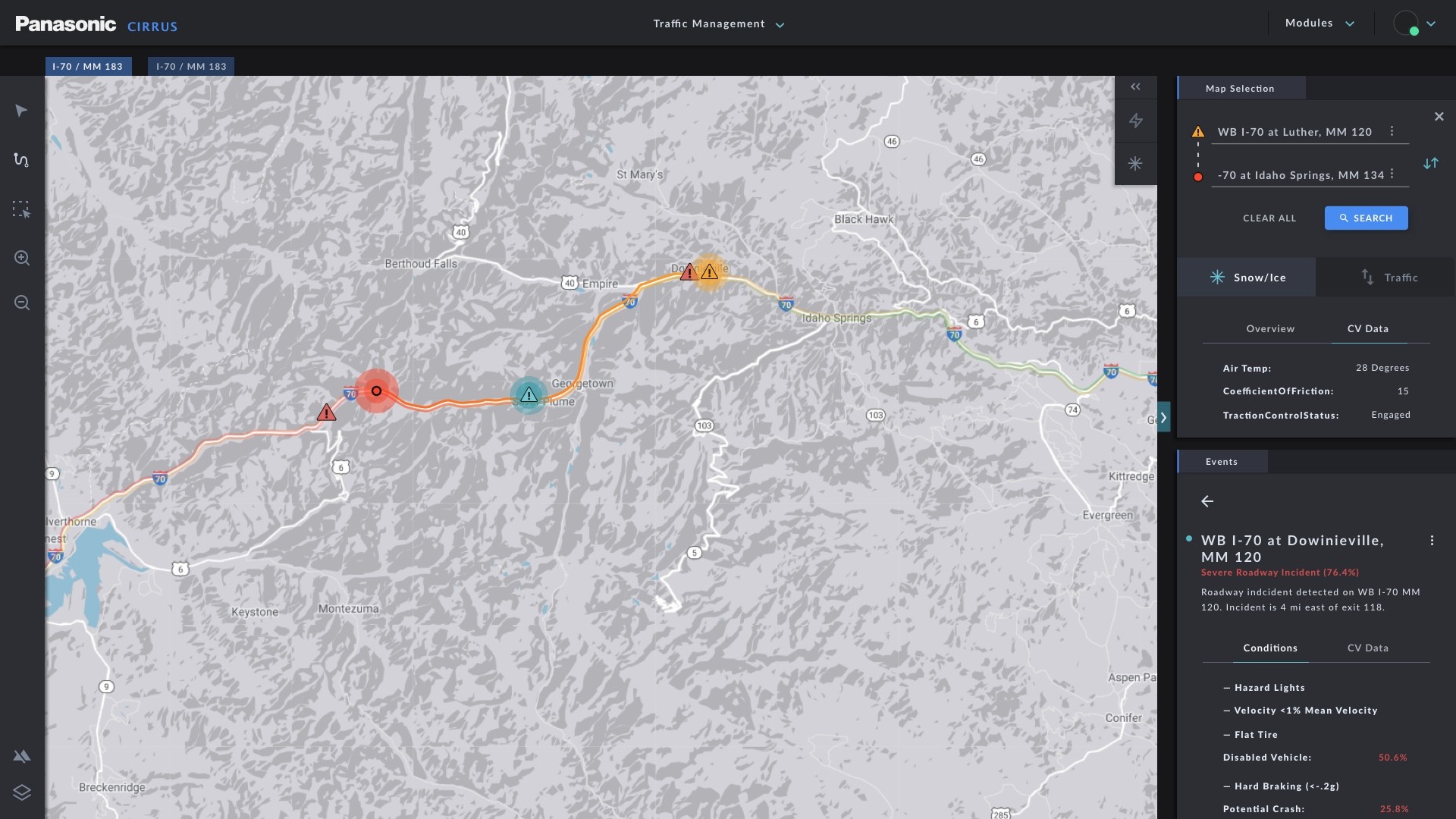
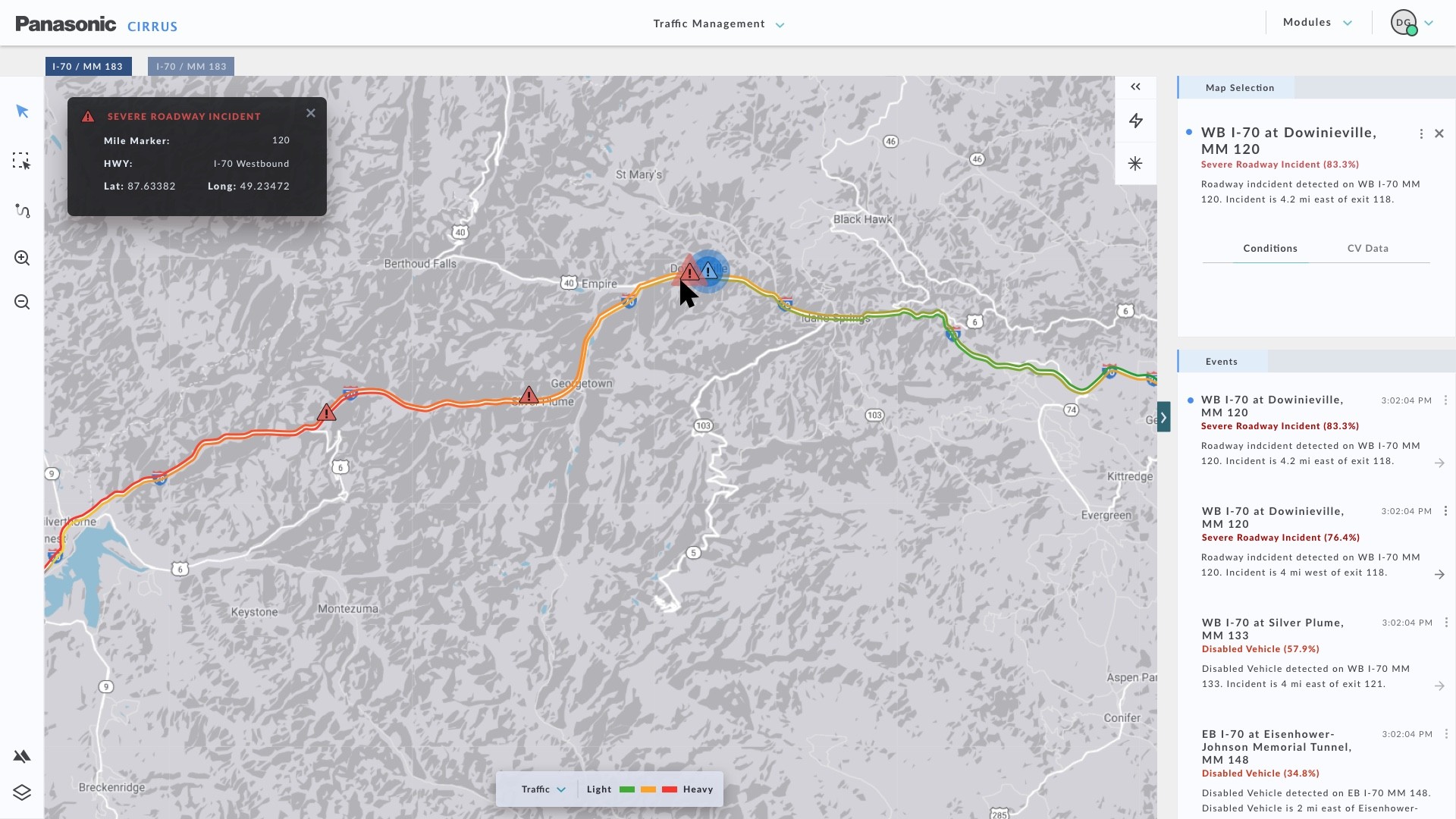
We shifted focus from 'RSU monitoring dashboard' to 'operational intelligence platform' to reduce cognitive load and enable faster incident response by creating actionable workflows rather than just data visualizations.
Competitive Landscape &
Our Positioning
We worked with our User Research team to conduct early user sessions around information architecture and market understanding of our competitors.
Traditional ITS vendors:
Attempted to bolt V2X monitoring onto existing traffic management systems, creating clunky interfaces.
Pure software plays:
Built beautiful dashboards but lacked integration with actual roadside hardware, providing data without operational context.
Our Opportunity
Build a cloud-native platform that bridges the gap between V2X hardware complexity and traffic operator workflows - eliminating technical barriers while providing actionable intelligence that integrates directly into existing incident response procedures.
Pain Points & Business Impact
Through research, we identified pain points that weren't just frustrating users, they were threatening V2X adoption:
The 'unknown-unknown' problem was costing millions: DOTs couldn't measure the financial impact of failed hardware because they weren't always clear on when devices when offline.
Integration gaps: operators were using 4-6 different systems. Adding another monitoring dashboard meant critical V2X data could be siloed unless someone remember to check.
Field visits were the only reliable way to diagnose: when a device was suspected of failure, nearly 100% of the time an operator would send a technician on-site.
UX Strategy
Where our competitors sold individual tools, CIRRUS offered a unified platform for managing entire V2X deployments - positioning it as the enabling technology for the broader connected mobility vision.
Design Principles
Context over raw data
Rather than overwhelming operators with telemetry data, the design used hierarchical information architecture: broad, strategic view surfaces first and a user can drill down when neccessary.
Confidence over volume
Facing pushback from engineering who wanted to expose tons of configuration parameters, the strategy was to: surface core operational controls in the primary interface and require additional authentication for advanced configurations.
Unified Device Health
Rather than overwhelm operators with raw telemetry data, I designed a hierarchical information architecture that surfaced operational status at the higher level while enabling drill-down to individual device diagnostics when needed.
Design Direction
CIRRUS required a design system built from the ground up - one that could scale across multiple product applications while meeting stringent government accessibility requirements.
Strategic decision: build vs adapt
We based our design system off Material Design and IBM's Carbon. We had unique constraints with infrastructure monitoring and what we needed to show.
Design System Thinking
Zero to 1
Established design system foundations that would scale across the broader CIRRUS platform, ensuring consistent patterns as the product expanded
Accessiblity-first
WCAG AA compliance, semantic color usage, keyboard navigation and ARIA friendly labels.
Library Development
Google Material Design was used as the basis of our design system, but the needs of our users required custom components that would help enrich our data visualizations and workflows
Lessons Learned
Platform thinking requires balancing immediate value with long-term architecture
The API-first architecture decisions made enabled the platform to support third-party integrations. This taught me how articulate long-term architectural value in terms of future revenue opportunities and competitive differentiation.
Workflow integration beats standalone excellence
CIRRUS won deployments because our experience worked with existing operational workflows. I've learned that in enterprise infrastructure markets, integration capabilities often matter more than interface innovation.
Infrastructure technology requires operational trust before technical sophistication
Early in this project, I pushed for advanced predictive analytics features that would forecast device failures. However, operators needed to first trust basic health monitoring before they'd rely on AI-driven predictions. I learned to sequence capabilities based on user confidence.
Next Phase: Cirrus 2.0
Based on the success of this work, Panasonic invested in Cirrus 2.0 - an expanded platform offering traffic insights, incident detection, and signal priority optimization. The operational intelligence approach we pioneered became the template for the broader platform.